Malaysia is the most visited country in Southeast Asia. Just one of its tourist gems in the Northwest is the Langkawi Archipelago in the Andaman Sea, just below the territorial waters of Thailand.
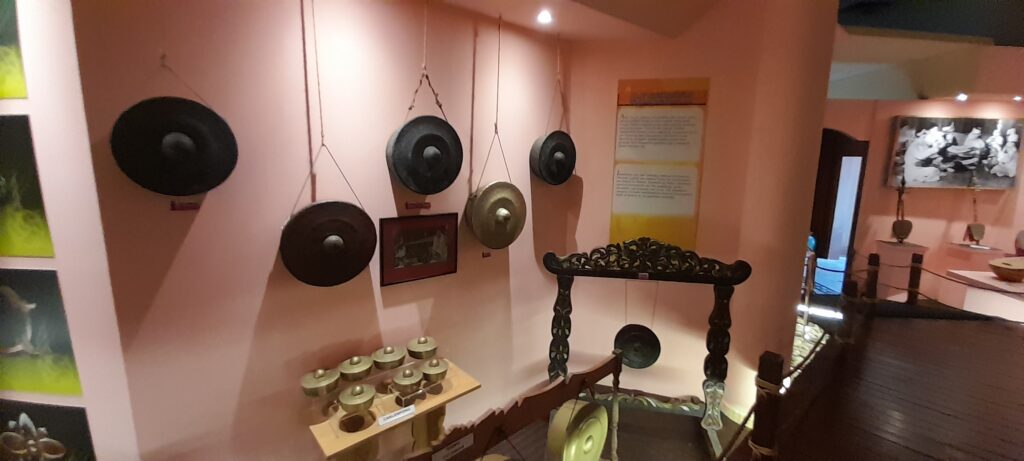
Langkawi is known as a paradise of natural beauty thanks to Malaysia’s most beautiful white beaches, turquoise waters, lush rainforests, and towering limestone cliffs that create a captivating landscape. There are also many waterfalls hidden in the jungle, vibrant coral reefs, and wildlife, from dolphins to soaring eagles, adding to the sense of wonder. Be sure to visit Underwater World with its 4,000 species of marine animals and fish, and the Kraf Complex, where you can not only visit the ethnographic museum but also buy local souvenirs. And don’t forget to try the delicious cuisine offering traditional Malay, Thai, and Chinese dishes at prices half those in Singapore, which is only a 1.5-hour flight away.
A group of Polish journalists had the opportunity to visit this region at the invitation of the Polish Media Association and the local authorities of Langkawi. And thanks to the courtesy of the Itaka travel agency, which, together with 300 other tourists, took them there on a plane chartered from LOT (9,000 km in 11 hours). The visit took place in March, when the bright sunshine and temperatures of 30-33 ºC meant that the humidity was not yet as oppressive as it is during the rainy season. However, the month-long Ramadan, which is the equivalent of Lent in the Christian religion, meant that there were no crowds of tourists, allowing visitors to enjoy all the charms of this unique place in peace.
This does not mean, however, that the region is not popular. In 2024, more than 22 million tourists visited Malaysia, which is more than Thailand (19 million). Langkawi consists of 99 islands, of which only three are inhabited, covering a total area of 478 km², equivalent to that of a large city. Last year, as many as 2.5 million tourists came here, the highest number since the COVID pandemic, although the previous record was 4 million. Local authorities began to focus on tourism in the 1980s, resulting in the construction of nearly 500 hotels, from PARKROYAL (5*) and Mercure (4*) to Airbnb, and increasingly interesting tourist attractions, with at least one new one being created every year.
How is this possible, given that the largest island in the archipelago, Pulau Langkawi, has a population of only 110,000? Well, 90% of them are employed in the tourism sector and speak English quite well, although they are a cultural mix of Malays, Chinese, and Indians. An airport has been made, there are regular ferries to the mainland, and in 1987 the island got a duty-free status. This is attractive not only to foreign tourists but also to residents of mainland Malaysia, who come here to shop. And to protect nature, no vehicles from outside the island are allowed in, offering instead a network of cheap car and scooter rentals, inexpensive taxis available through the Crab app, and public transportation. The island was accorded as World Heritage Geopark status in 2007 by UNESCO because of its stunning geological landscape. The tropical gem hides a treasure trove of other exciting holiday opportunities. From the expansive Underwater World Langkawi along Pantai Cenang to the soaring Cable Car in Pantai Kok, Langkawi is an electrifying locale that keeps visitors coming back for more.
From SkyCab and SkyBridge to Maha Tower
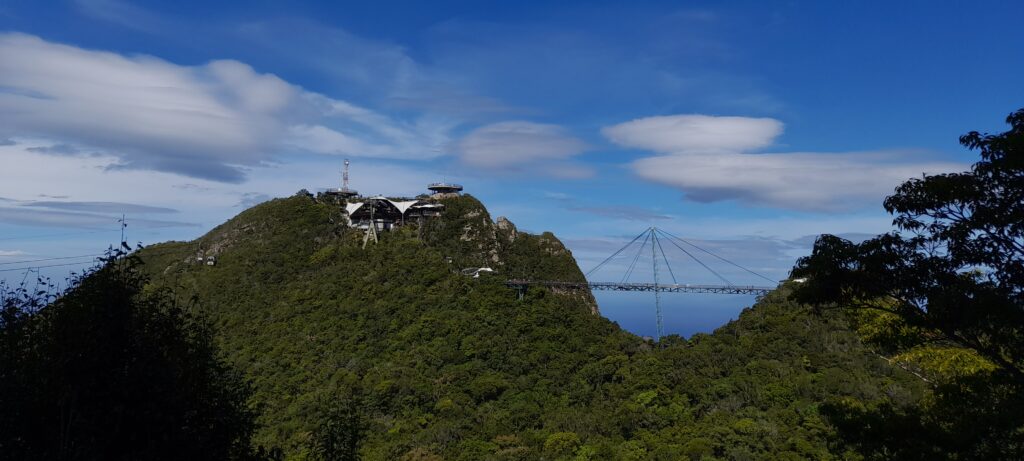
The biggest tourist attraction is undoubtedly the longest cable car in Malaysia – SkyCab (900 m), which takes visitors to the highest mountain on the island, Machichang (881 m). From here, you can enjoy fabulous views of 0.5 billion-year-old rock formations and hills covered with tropical jungle, which covers 60% of the island’s surface, picturesque rice fields and other smaller islands of the archipelago, as well as the nearby shores of Thailand. Between the mountains, there is a curved SkyBridge and a 38-meter viewing platform in the shape of an eagle’s head with a glass floor, protruding over a 650-meter precipice. The only thing to watch out for here is the ubiquitous monkeys that steal food from tourists. At the lower station of the cable car, there is Oriental Village with numerous restaurants and souvenir and clothing shops, as well as 3D Interactive, where you can take pictures with copies of the most famous works of art of monstrous size, including the Sphinx. And if you want to see the jungle up close, you should go to Dream Forest in the evening.

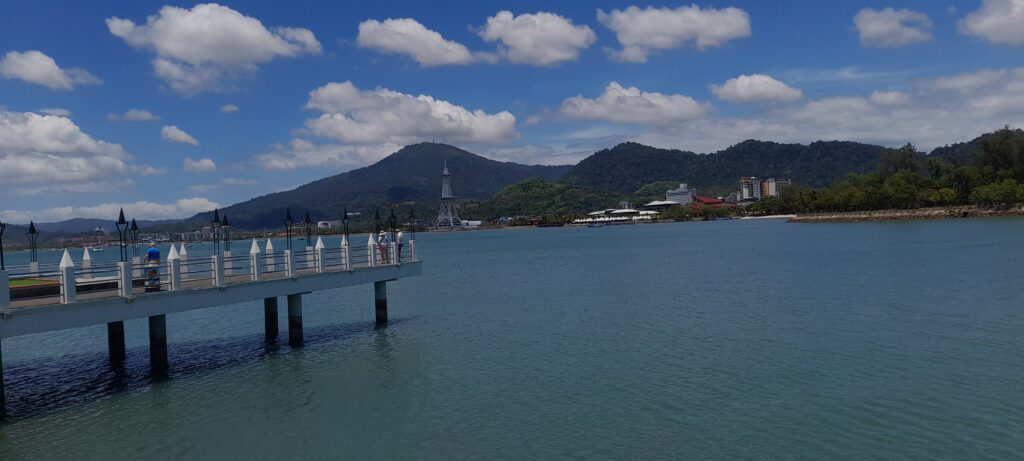
Beautiful views of the archipelago’s capital, Kuah, and its marina can also be admired near Eagle Square in the very center of the city from the 138-meter-high Maha Tower, which opened just 1.5 years ago and has an observation deck with, unsurprisingly, a glass floor.
Mangrove forests
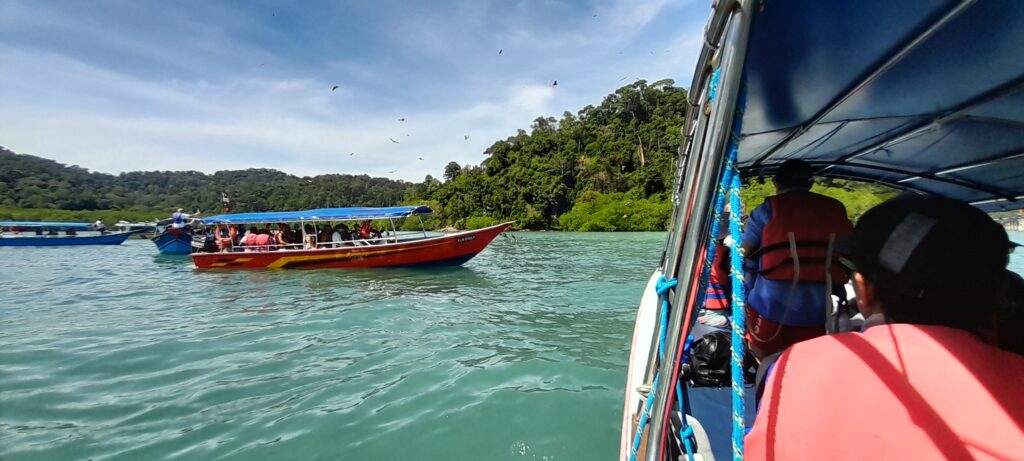
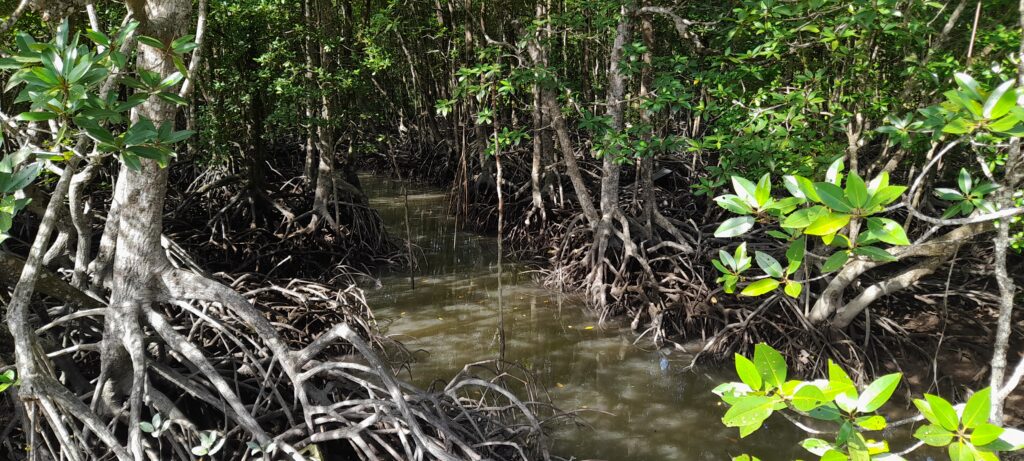
The mangrove forests are a huge attraction of the island, but as they cover only 3% of its area and are very dense, it is best to view them in Kilim Geoforest Park (a UNESCO World Heritage Site) from a boat traveling along the Kilim River, from which the park takes its name and which is surrounded by them. There are hidden waterfalls, caves with stalactites and stalagmites inhabited by bats, as well as countless red-backed eagles, which can be observed trying to hunt fish in the water. It is from them that the entire archipelago, of which they are the emblem, takes its name, and a dozen or so years ago, they were honored with the erection of a 12-meter sculpture of this beautiful bird in the marina on Eagle Square – a symbol of the island, freedom, and strength.

Island Hopping
Of course, you cannot miss the opportunity to visit at least a few islands located near the largest one on board small motorboats. Beras Basah (Wet Rice Island), where you can swim on a beautiful beach, and Singa Besa (Great Lion Island), near which you can watch eagles in flight and try your hand at fishing from a boat, are very popular. However, as only small fish can be caught, they are all released back into the water, but lunch is usually eaten at a floating restaurant offering fish and seafood.

However, the most popular destination is the second largest island in the archipelago after Langkawi, Dayang Punting, which resembles a pregnant girl lying on her back and can be reached by boat from the main island in 20 minutes. It is home to the largest freshwater lake in the archipelago, which is of great interest to couples trying to conceive, as legend has it that drinking its water can help. The lake was formed many thousands of years ago when the upper part of a rock massif collapsed, creating a valley that was eventually filled with rainwater. So, to get there, you first have to climb the surrounding hill and then descend to the water level, from where it is worth going to a place called a natural wonder, because you can see both the lake and the sea from there.

Ramadan
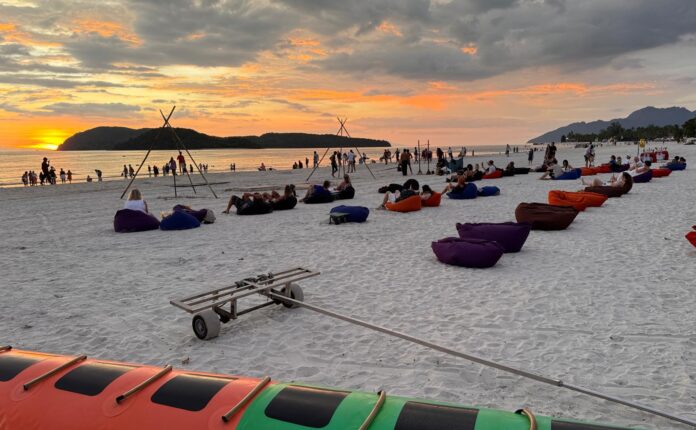
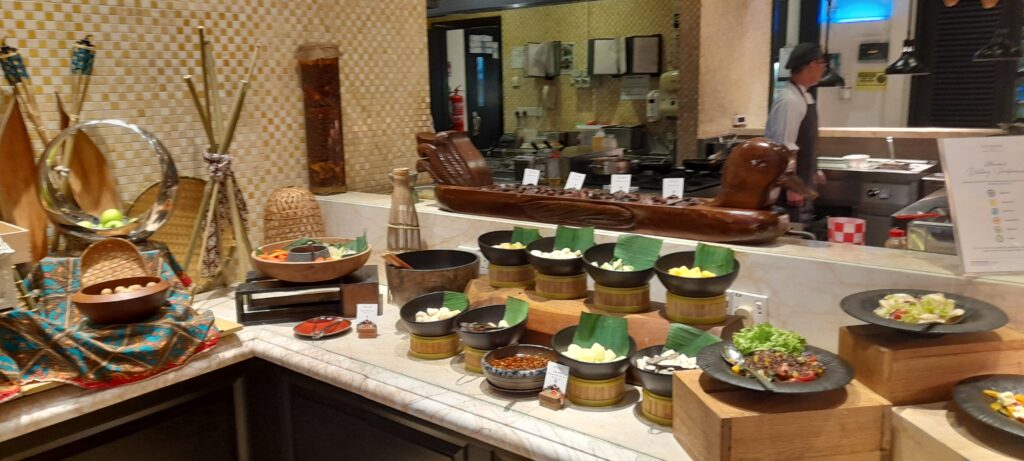
One of Langkawi’s strengths is its delicious food, and Ramadan could not change this opinion, although all Muslim restaurants were closed from sunrise to sunset and, apart from hotels, you could only eat lunch in Chinese or Indian restaurants. However, it was worth accepting the invitation of the local authorities to an open-air iftar dinner, which was served as the first meal of the day to 3,000 guests right on the beach from 7:24 p.m., i.e. from the moment the sun had just set. The dinner was eaten sitting on the ground, and after the muezzin’s prayer, a regional music band entertained the guests.

MARDI Fruit Farm
Fruit is a separate topic, which can be enjoyed every day, but to see how it grows, you have to go to MARDI Fruit Farm, for example. On an area of 27 hectares, you can see huge jackfruit, tasty but smelly durian (at this time of year, however, too small to be edible), mangoes, guavas, papayas, pineapples (which grow on a small bush that bears fruit once a year and produces only one fruit!), red and yellow watermelons, and starfruit, hence the English name starfruit. You can also see rubber trees, which are one of Malaysia’s most important commercial products, and rice fields. But at the very beginning, there is a fruit tasting, which is an unforgettable experience, considering that the fruits are picked just before consumption.

The staff offers to take a photo with a carambola. Instead of placing the fruit in the hands of the person being photographed, they place it on a skewer right in front of the camera, creating the illusion that the fruit is huge, even though it is only 6-8 cm in size. When you post such a photo on Facebook, the effect is guaranteed, as I found out for myself!
Crocodile farm
There are over 4,000 of them living on the island, but Crocodile Adventureland has about 300, some of which escaped and have not been found to this day. Because the animals are well cared for here, they reproduce easily. There is one albino and one that was born… paralysed, but is still alive. There are training shows several times a day, and one of the most memorable ones is kissing a crocodile (weighing about 500 kg) on the forehead and putting your hand in its mouth. Apparently, during the rainy season, the trainer is not afraid to put his head in the crocodile’s mouth, but this is not practised during the dry season, because the crocodiles are a bit nervous then, and it is not worth tempting fate.

The world of magic
The tropical pearl of Malaysia is not only white beaches and azure lagoons – it is also mysterious caves, majestic waterfalls hidden among dense rainforests, and mesmerising wonders of nature. Here, magic awaits at every turn, and the thrill of visiting this unique corner of the earth will be remembered for a lifetime. It’s worth going there!

Wojciech Gryciuk, Manager Report, w.gryciuk@manager.com.pl
Polish version: https://manageronline.pl/malezja-zima/